Think of your website as the host that introduces your business to every visitor. How your website presents your business to your audience determines if a visitor becomes a customer.
Since everyone understands the importance of having a website, you might be wondering whether to choose a ready-to-use template and deploy your website quickly or invest time and money in custom web development services.
This blog will break down the key differences between custom and template websites while helping you decide what to choose this year for your business.
Before we dive into the differences, let’s first understand what they are.
Table of Contents
What Are Template Websites?
Template websites are built using pre-designed layouts and themes that can be customized with content and branding. They are mostly drag-and-drop, easy to use, and beginner-friendly.
You can create a template-based website using CMS platforms such as WordPress, Wix, Squarespace, etc., which provide 100+ templates and plugins to quickly build websites without coding.
What Is Custom Web Development?
A custom web application is the process of building websites or web applications from scratch. For this, you hire a professional developer who codes features and designs elements around your brand’s vision and goals.
Moving away from the one-size-fits-all approach, custom web development focuses on understanding the specific needs of your business and creating a website or web application that aligns perfectly with your brand’s long-term vision.
For example, Amazon uses a highly customized system to handle millions of products, provide personalized recommendations, and manage complex logistics.
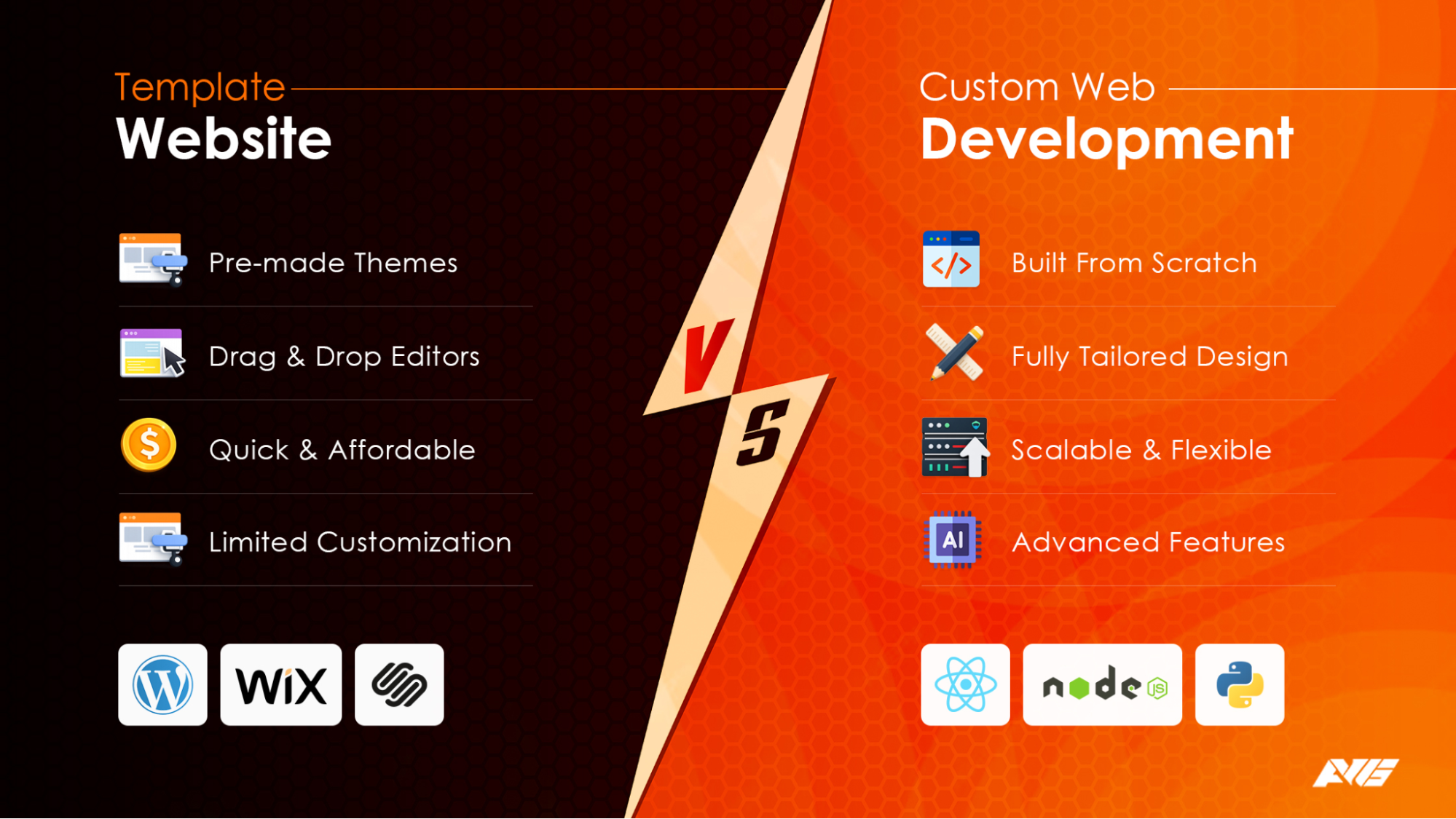
Custom Web Development vs Template Websites: Key Differences in Detail
Here’s what differentiates custom web development from template websites:
Unique Advantage
Custom web development gives you a competitive advantage in a market saturated with template-based websites. It helps your business stand out by offering unique designs, features, and elements that customers can easily remember and associate with your brand.
While template websites are a great starting point for beginners or businesses with limited budgets, custom websites are a better long-term investment. They are built to generate higher ROI, especially when you plan to scale and require specific functionalities that templates cannot fully support.
Cost Comparision
Template websites can be created on a lower budget. For example, platforms like WordPress, Wix, or Squarespace offer pre-designed templates that let you quickly build a website without coding.
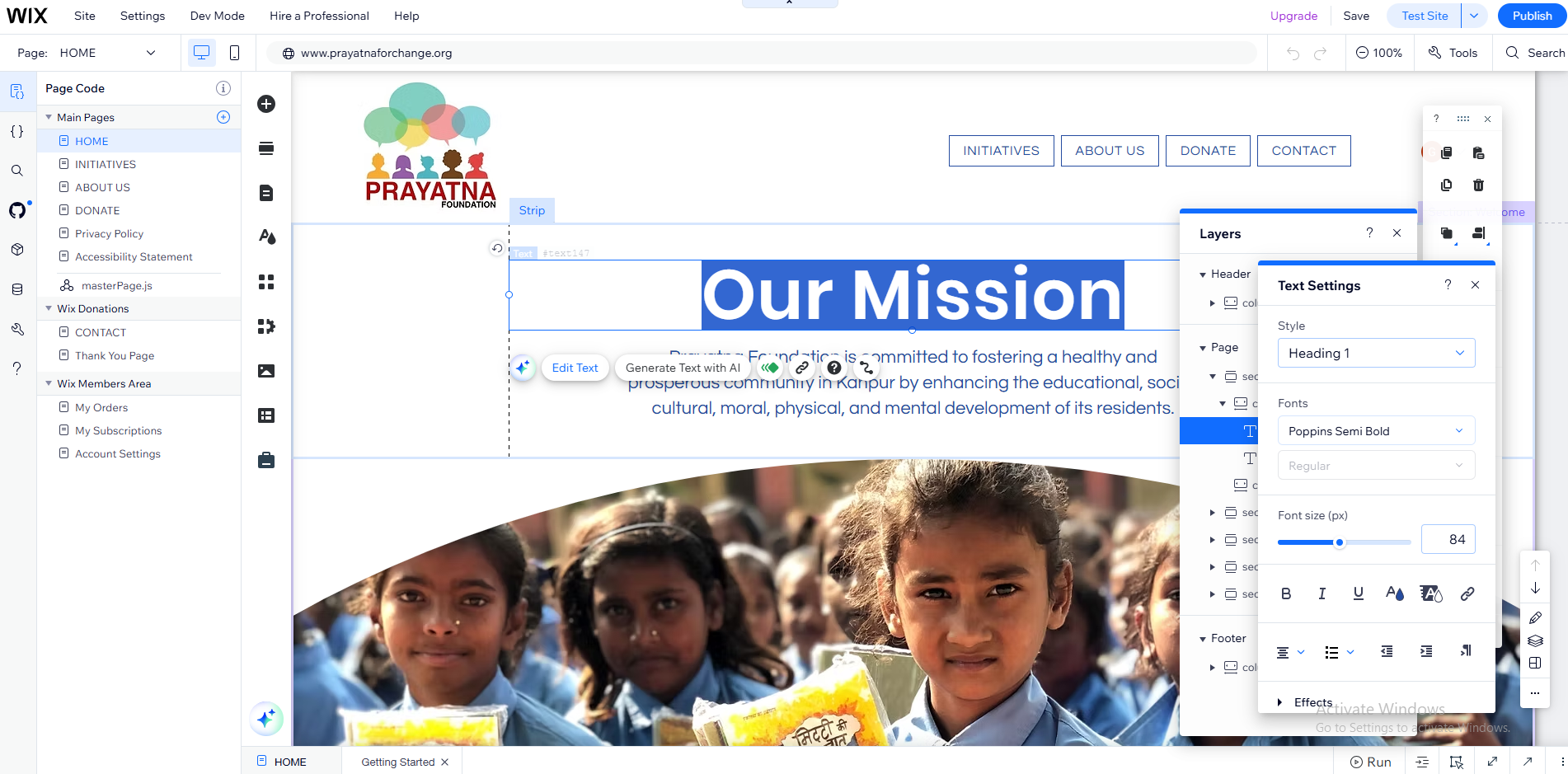
These platforms often have free or low-cost pricing plans, ranging from $0 to $30 per month, depending on the features and level of customization needed.
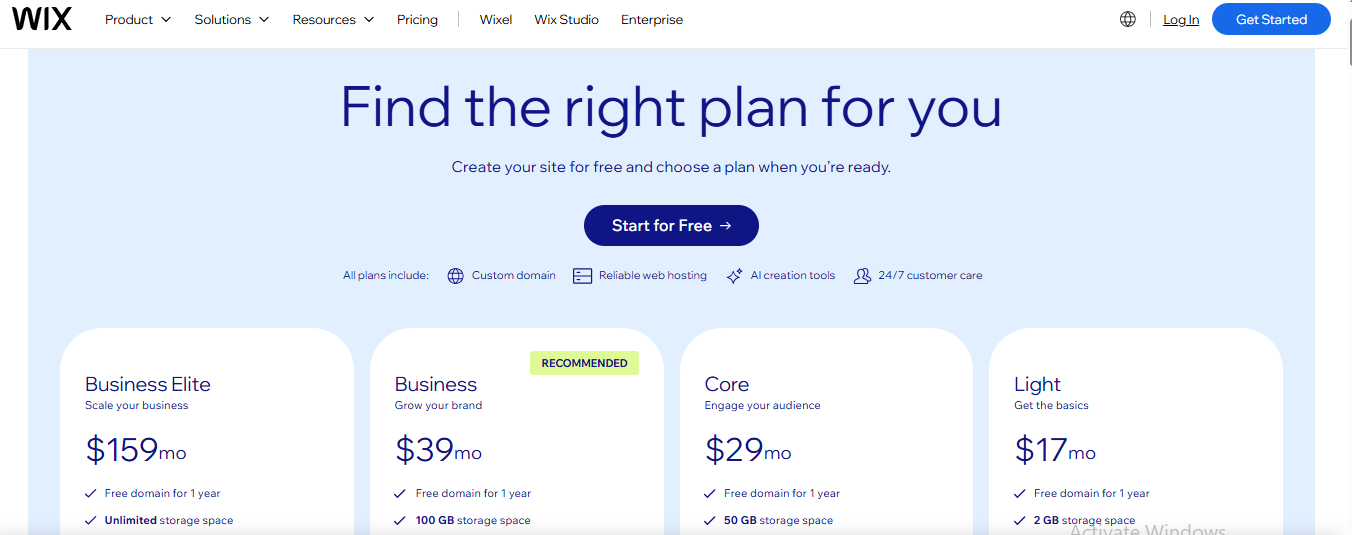
However, while template websites are cost-effective initially, they may come with limitations in terms of design flexibility and uniqueness. For example, you may be limited in terms of customization or the ability to integrate advanced features like custom databases, complex forms, or third-party applications.
Customization Capabilities
Template websites can be customised, however, to a limited extent. You can, for example, change content, colours, themes, etc. While these changes can help align the site with your brand, the underlying structure and functionality remain constrained by the template.
To have complete access to backend functionalities, you need to custom-build solutions. For large businesses, it’s best to go for custom solutions in the first place to enjoy flexibility and scalability in the later stages. Custom websites allow you to give a personalised experience to your users.
Did you know?
More than 60% of consumers prefer brands that provide personalized experiences.
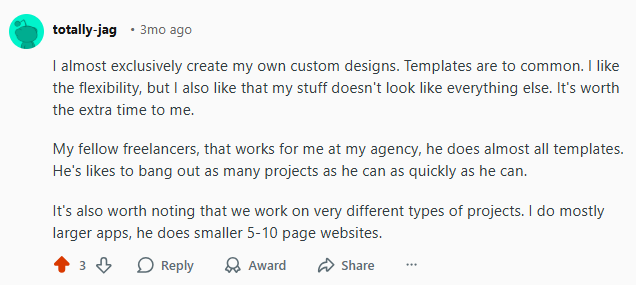
Below is a Reddit user sharing their experience with creating custom designs. They favor building everything from scratch for flexibility and uniqueness, believing the extra time is worth it to avoid generic results.
Source: Reddit
SEO Control
While both template websites and custom ones have the features and plugins to optimize them for SEO, the difference lies in handling complex SEO requirements. Take a look at the image below illustrating SEO control on a template-based website in Wix.
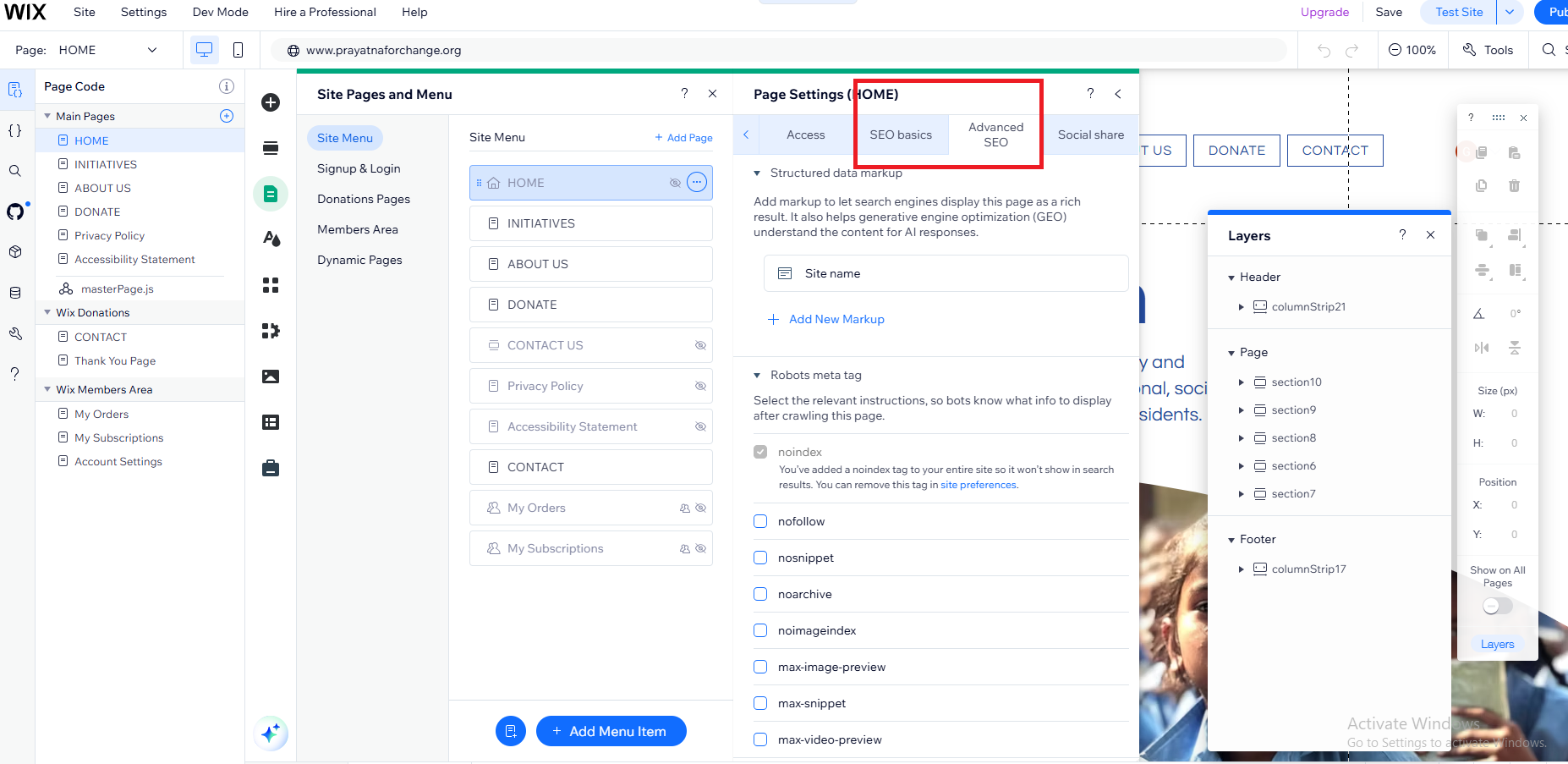
For large-scale businesses with multiple web pages, custom websites are generally more effective because they offer greater control over site structure, technical SEO implementation, and integration with backend systems and web development frameworks.
Security
Security is an important component of a business that can’t be slacked off. Template-based websites offer little security due to plugins and third-party integrations.
Plugins are sometimes unauthorized or sourced from untrusted providers; when installed, they can introduce security vulnerabilities, data breaches, and ultimately a loss of customer trust.
However, a custom-built website developed by a reputable agency is generally more secure because the code is written specifically for the project, reducing reliance on widely exploited third-party components.
Experienced developers follow secure coding practices, conduct thorough testing, and implement safeguards such as input validation, encryption, and access controls.
Scalability
Template-based websites often struggle when a business starts growing. As traffic increases or new features are required, performance can drop, and plugin dependencies may start causing limitations or conflicts.
Expanding functionality usually involves workarounds or even partial rebuilding, which can increase long-term effort and cost.
Custom-built websites handle growth more smoothly because they are structured with expansion in mind. New features, integrations, and higher traffic loads can be supported without disrupting the core system, making it easier to evolve the platform over time.
Flexibility
Flexibility is limited in template solutions since design and functionality are tied to predefined layouts. Custom development removes these restrictions, allowing changes in user experience, integrations, and business logic whenever needed.
This makes it easier to adjust quickly to market or business changes without being constrained by platform limitations.
When Should You Not Choose Template Websites?
While template websites work well for basic needs and quick launches, they are not always the right choice for every business requirement.
- When you need custom functionality or complex features
- When your business is planning to scale rapidly
- When user experience needs to be highly customized
- When strong and unique branding is important
- When security requirements are high or sensitive data is involved
- When SEO performance and site speed are critical priorities
- When long-term flexibility and future expansion are required
If you have these requirements, you should look for top web development companies for your business.

Our expert Front-end Developer with 10+ years of experience, Naveen Thakur, says that template websites can become limiting when businesses need advanced functionality, stronger security, or room to scale.
Key takeaway
So far, we have discussed how template websites differ from custom web application development and how you can leverage both based on your business goals.
What you should really take away from the above blog is primarily to create a roadmap for your brand by evaluating long-term goals, strategies, budget, and audience.
By carefully analyzing these aspects, you will be able to decide whether to go with a template or outsource your project to build something truly unique.
In case of any confusion, feel free to reach out to the expert team at Aron Web Solutions. We are here to create both custom and template-based websites, assisting you in every possible way.
Disclaimer: This is not a sponsored or promotional blog post. All recommendations and insights are drawn from our team’s direct experience.
Frequently Asked Questions
A template website uses pre-designed layouts that can be quickly customized with content. In contrast, a custom website is built from scratch, offering a unique design, functionality, and flexibility tailored to your specific business requirements.
Specialized web development companies like Aron Web Solutions, dedicated healthcare IT firms, or experienced freelance developers offer custom healthcare web app development.
Costs vary based on complexity, features, and project scope, typically ranging from $10,000 for basic apps to $100,000+ for enterprise-level solutions. Get a quote today.
Timelines can vary based on your project’s scope, but typically, a custom web application can take anywhere from a few weeks for simple apps to several months for more complex solutions. We’ll work with you to establish a clear timeline and keep you updated every step of the way.
Our custom web applications are built with robust security features such as SSL encryption, role-based access control, data encryption, and secure authentication. We follow industry best practices to ensure your application is secure and complies with the latest standards, like GDPR and HIPAA.
Yes, custom applications can be built to integrate seamlessly with existing software, databases, and third-party services to ensure smooth operations.
Yes, custom web development can improve SEO performance. Unlike template websites, custom websites allow for full control over site structure, technical SEO elements, and optimization.